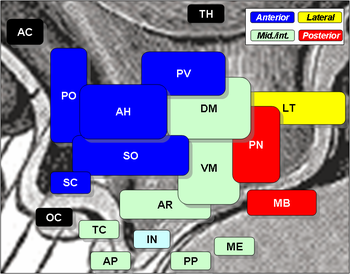
Hypothalamus: Functions
The hypothalamus is a small but crucial part of the brain located just below the thalamus. It regulates body temperature, appetite, thirst, fatigue, and circadian rhythms through the release of hormones and other mechanisms.
- Regulating Body Temperature
- The hypothalamus helps maintain a stable body temperature by triggering responses like sweating or shivering.
- Controlling Appetite and Thirst
- It monitors nutrient levels and signals hunger or thirst to ensure the body gets the necessary sustenance.
- Managing Sleep-Wake Cycles
- The hypothalamus regulates circadian rhythms, influencing sleep patterns and wakefulness.
- Releasing Hormones
- It produces and releases hormones that control various bodily functions, including growth, metabolism, and stress responses.
- Emotional Responses
- The hypothalamus is involved in emotional regulation and can influence behaviors related to fear, pleasure, and aggression.
Below is a list of functions of some of the hypothalamus nuclei.
| NUCLEI | FUNCTION
|
|---|
| Suprachiasmatic (SC) nucleus |
Regulates diurnal rhythm, controlling the body's sleep-wake cycle and responding to light and dark signals. |
| Paraventricular (PV) nucleus |
Regulates seasonal rhythm and synthesizes oxytocin. |
| Supraoptic (SO) nucleus |
Synthesizes antidiuretic hormone (ADH), which helps regulate water balance in the body. |
| Anterior Hypothalamic Nucleus (AH) |
Controls parasympathetic functions, decreasing heart rate and increasing gastrointestinal activity. |
| Posterior Nucleus (PN) |
Controls sympathetic functions, increasing heart rate. |
| Dorsomedial hypothalamic nucleus (DM) |
Regulates hunger and emotional responses, influencing feeding behavior, circadian rhythms, and emotional states. |
| Ventromedial nucleus (VM) |
Regulates satiety and emotional responses, signaling when the body is full and influencing emotional states. |
| Arcuate nucleus (AR) |
Regulates the anterior pituitary gland, influencing hormone release and metabolic processes. The arcuate nucleus exhibits a high density of neuropeptide Y. |
| Mammillary Body (MB) |
Connects to the limbic system and tegmental area via the fornix, playing a role in memory and emotional responses. |